
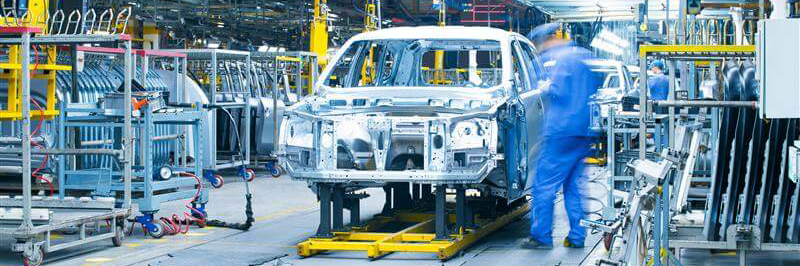

The global automotive industry is at a critical juncture. While the transition to electric vehicles (EVs) has dominated headlines, a more silent but equally vital revolution is occurring behind the scenes. Decarbonizing the automotive supply chain is no longer a peripheral corporate social responsibility goal; it is a fundamental requirement for the industry’s survival in a carbon-constrained world. With the target year of 2030 approaching, manufacturers are racing to overhaul centuries-old procurement and production models to meet net-zero commitments.
The Magnitude of the Supply Chain Challenge
For decades, the primary focus of automotive sustainability was “tailpipe emissions.” However, as internal combustion engines are phased out, the “embedded carbon”—the emissions generated during the extraction, processing, and manufacturing of vehicle components—becomes the dominant share of a vehicle’s total carbon footprint.
In a traditional vehicle, the supply chain accounts for roughly 20% of life-cycle emissions. In an electric vehicle, that figure can jump to 45% or higher, largely due to the energy-intensive nature of battery production and the processing of raw materials like steel and aluminum. To reach a meaningful reduction by 2030, the industry must look beyond the assembly plant and into the deep tiers of its global supplier network.
Shifting to Green Steel and Aluminum
Steel and aluminum represent the backbone of vehicle structural integrity, but they are also among the most carbon-intensive materials to produce. Traditional blast furnace steel production relies heavily on coking coal, contributing significantly to global CO2 levels.
By 2030, the industry is pivoting toward Green Steel. This involves utilizing hydrogen-based direct reduced iron (DRI) processes powered by renewable energy. Major automotive players have already entered into forward-purchasing agreements with steelmakers to secure early batches of fossil-free steel.
Similarly, aluminum production is undergoing a transformation. By utilizing inert anode technology and hydropower, manufacturers can reduce the carbon intensity of aluminum by up to 90%. Circularity plays a massive role here; recycled aluminum requires only 5% of the energy needed to produce primary aluminum, making “closed-loop” recycling programs a top priority for OEMs (Original Equipment Manufacturers).
The Battery Paradox: Cleaning the Power Source
The battery is the heart of the decarbonization effort, yet its production is currently one of the largest sources of emissions in the EV lifecycle. Decarbonizing the battery supply chain by 2030 requires a multi-pronged approach:
-
Localized Gigafactories: Reducing the logistics footprint by building batteries close to vehicle assembly plants.
-
Low-Carbon Mineral Extraction: Partnering with mining companies that use electric machinery and renewable energy for lithium, cobalt, and nickel extraction.
-
Anode and Cathode Innovation: Transitioning to synthetic graphite or silicon-anode technologies that require less energy-intensive processing.
-
End-of-Life Recycling: Establishing a secondary market where minerals from “spent” batteries are reclaimed, reducing the need for new mining operations.
Decarbonizing Logistics and Tier-N Transparency
Decarbonization cannot happen in a vacuum. A car contains approximately 30,000 parts, sourced from thousands of suppliers across multiple continents. Achieving transparency in “Tier-N” suppliers—those who provide components to your direct suppliers—is one of the greatest hurdles.
Digital Twins and Blockchain
To meet 2030 targets, companies are deploying digital twins and blockchain technology to track the carbon “passport” of every component. This allows manufacturers to see exactly where a part came from and what the carbon cost of its transport was.
Sustainable Logistics
The physical movement of goods must also evolve. By 2030, the industry is moving toward:
-
Biofuels and Hydrogen Trucking: Transitioning long-haul freight away from diesel.
-
Optimized Route Planning: Using AI to reduce empty-load miles and improve fuel efficiency.
-
Green Shipping: Utilizing liquefied natural gas (LNG) or wind-assisted propulsion for transoceanic parts shipments.
The Role of Renewable Energy in Manufacturing
While many automakers have achieved “carbon neutral” status for their own assembly plants, they are now mandating that their suppliers do the same. By 2030, many major OEMs will require their top-tier suppliers to run on 100% renewable electricity.
This shift involves the massive installation of on-site solar arrays and the signing of Power Purchase Agreements (PPAs) that fund new wind and solar farms. Furthermore, the electrification of heat—moving away from gas-fired furnaces for paint shops and metal treatment—is essential for eliminating Scope 1 and Scope 2 emissions within the production facility.
Circular Economy: Moving From Linear to Loop
The traditional “take-make-dispose” model is incompatible with 2030 decarbonization goals. A circular economy approach ensures that materials stay in the value chain for as long as possible.
Automakers are increasingly designing vehicles for disassembly. This means using mono-materials that are easier to recycle and avoiding adhesives that contaminate material streams. By 2030, a significant percentage of a new vehicle’s mass will likely come from post-consumer recycled content, effectively “decoupling” growth from resource extraction.
Regulatory Pressure and Economic Incentives
The move toward 2030 is bolstered by aggressive regulatory frameworks. In the United States, the Inflation Reduction Act (IRA) provides significant incentives for domestic sourcing and clean energy manufacturing. Simultaneously, carbon border adjustment mechanisms are emerging, which penalize the import of high-carbon materials like steel and cement.
These regulations create an economic environment where “green” components become more cost-competitive than their high-carbon counterparts. Companies that fail to decarbonize their supply chains face not only brand damage but also significant financial penalties and loss of market access.
Collaborative Innovation
No single company can decarbonize the entire automotive ecosystem alone. Pre-competitive collaboration is becoming the norm. Competitors are joining forces in consortia to set industry-wide standards for carbon accounting and to co-invest in the infrastructure needed for green hydrogen or large-scale recycling.
The shift is moving from a transactional relationship with suppliers to a partnership-based model. OEMs are providing technical assistance and low-interest financing to smaller suppliers to help them transition to cleaner technologies, recognizing that a single weak link can compromise the entire brand’s sustainability claims.
Frequently Asked Questions
How does the use of synthetic materials affect the 2030 carbon goals?
Synthetic materials, particularly bio-based plastics and vegan leathers, are being introduced to replace petroleum-based interiors. By utilizing agricultural waste or captured carbon to create these polymers, manufacturers can significantly reduce the Scope 3 emissions associated with vehicle upholstery and trim.
What is the impact of software-defined vehicles on supply chain carbon?
Software-defined vehicles allow for over-the-air updates that can optimize battery management and efficiency throughout the vehicle’s life. This extends the longevity of the hardware, reducing the frequency with which new parts must be manufactured and shipped, thereby lowering the cumulative carbon footprint.
Are there specific challenges for heavy-duty vehicle supply chains compared to passenger cars?
Yes. Heavy-duty vehicles require much larger batteries or hydrogen fuel cells, which increases the demand for specialized raw materials. The decarbonization of the heavy-duty supply chain often lags slightly behind passenger cars due to the higher energy requirements for manufacturing larger structural components and specialized drivetrains.
How is the “Right to Repair” movement linked to decarbonization?
The Right to Repair facilitates a longer vehicle lifespan by making it easier for consumers to replace modular components rather than scrapping the entire vehicle. A longer-lasting vehicle reduces the demand for new production, which is the most effective way to lower total supply chain emissions.
Can carbon capture technology be used within the supply chain?
Carbon capture is increasingly being integrated into the “hard-to-abate” sectors of the supply chain, such as cement for factory construction and certain chemical processing plants. While not a silver bullet, it serves as a bridge technology to mitigate emissions that cannot yet be eliminated through electrification or hydrogen.
Will decarbonizing the supply chain make vehicles more expensive by 2030?
Initially, the transition requires significant capital expenditure, which can lead to higher component costs. However, as green technologies scale and carbon taxes increase the cost of “dirty” production, green supply chains are expected to reach cost parity. Additionally, increased efficiency and material recycling will provide long-term cost savings.
What role does water scarcity play in a decarbonized supply chain?
While the primary focus is carbon, water management is intrinsically linked. Many low-carbon energy sources and mineral extraction processes are water-intensive. A truly sustainable 2030 supply chain must balance carbon reduction with water stewardship to ensure that “green” solutions do not create unintended environmental crises in arid regions where minerals are mined.
